AI Security Audits

Address your AI risk.

Reach out to us to conduct an AI audit to enhance the security of your models against potential AI risks and weaknesses.

Use case 1

AI privacy & security

Simply put, AI model security and privacy encompass the protection of artificial intelligence models and the sensitive data they handle from unauthorized access, manipulation, or disclosure. Threats usually span from data poisoning and breaches, to adversarial, inference or backdoor attacks.

From development to production, it is crucial to prioritize the security of AI systems as a vulnerability could lead to inaccurate and faulty predictions.

Strengthen your models against these threats by utilizing our unlearning methods, Differential Privacy (DP), Zero-Knowledge Machine Learning (ZKML) and Fully-Homomorphic Encryption (FHEML) approaches.

Machine unlearningDifferential privacyZK-MLFHE-MLEnsembles
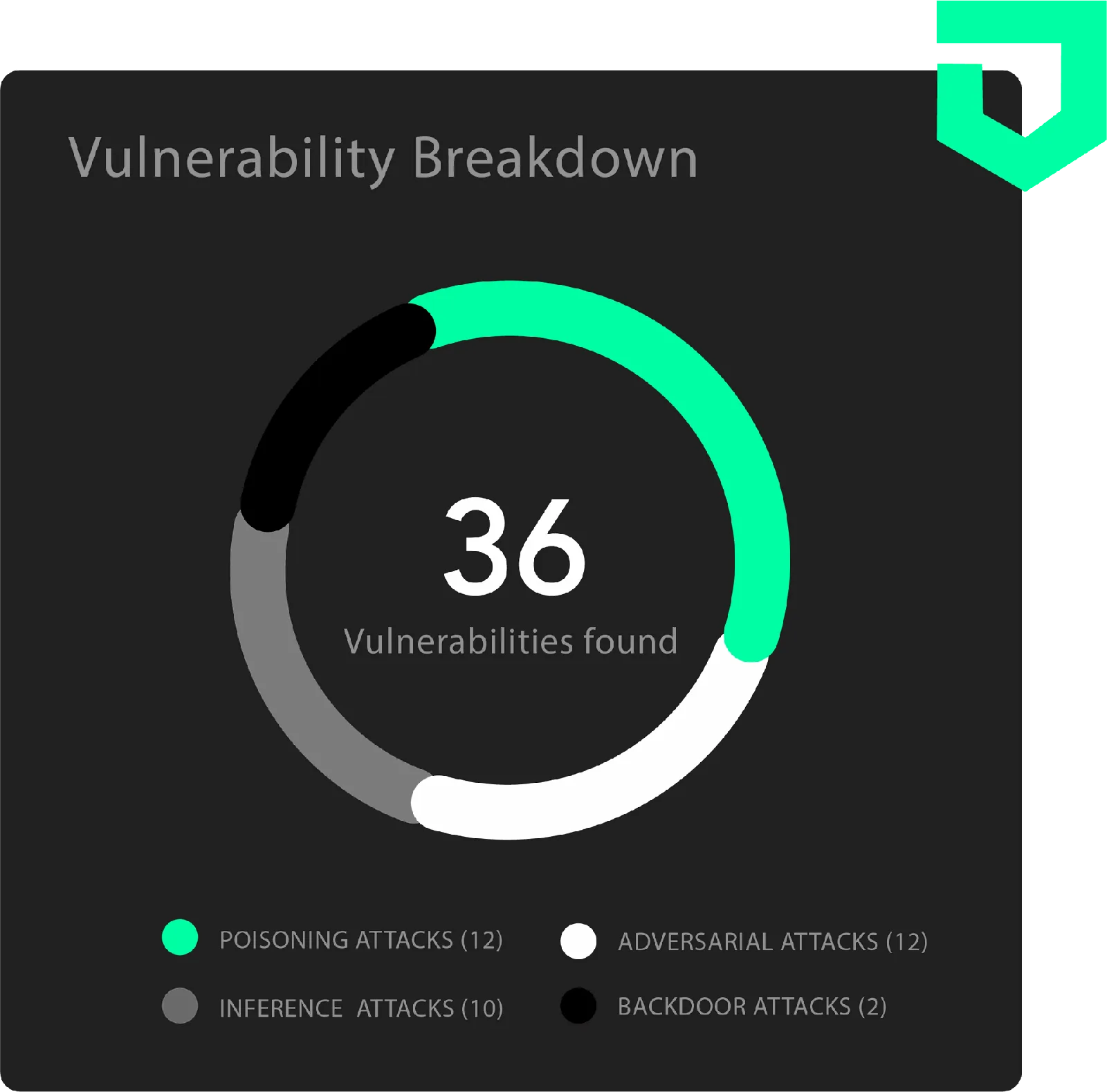
Defaince vulnerability breakdown
Use case 2

AI model robustness

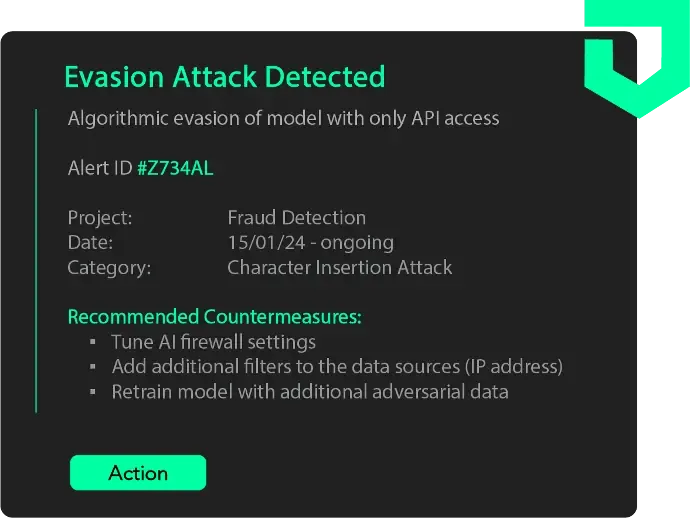
AI model robustness refers to the ability of an artificial intelligence model to maintain its performance, accuracy and soundness even when it encounters unforeseen or adversarial inputs or conditions such as adversarial attacks, model poisoning, and model evasion or extraction.

A robust AI model should be able to generalize well to new data and resist these types of attacks or perturbations without significant degradation in performance.

Using the world's largest AI security arsenal, we are able to provide you with an all-encompassing suite of powerful generative adversarial defense methods and innovative enhancements to bolster the resilience of your models against AI-related risks.

Adversarial trainingInput sanitizationAnomaly detectionDistillationModel verification
Defaince evasion attack alert with recommended countermeasures
Use case 3

AI model scaling

Technically speaking, model scaling involves enhancing the capacity and performance of AI models to handle larger datasets and more complex computations, which is a crucial step for improving the accuracy and efficiency of AI applications in real-world scenarios.

While modern neural networks are relatively speaking the most scalable form of machine learning, state-of-the-art LLMs and image synthesis models still induce heavy server costs for their inference.

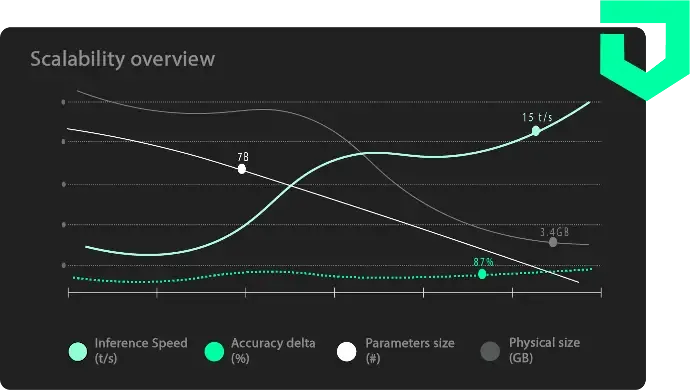
Using Defaince's automatic distillation API, we shrink your model down to consumer-friendly sizes and save inference costs without forcing a full or partial re-train on your architecture.

Automatic distillation APIFewer parametersFaster inferenceLower serving cost
Defaince scalability overview: inference speed, accuracy, parameter size
Use case 4

AI governance & compliance

AI governance and compliance encompass the creation of frameworks to ensure the lawful, responsible, and ethical development of AI. This involves establishing policies for data management, promoting transparency, fostering accountability, and mitigating risks throughout the entire AI lifecycle.

Threats to governance and compliance usually arise from data breaches, biases in decision-making, and model divergence over time.

Therefore, enhancing AI governance and compliance necessitates embracing ethical principles, implementing robust policies, conducting regular audits, engaging with stakeholders, and continuously refining practices based on feedback and emerging best practices in the industry.

OWASP LLM Top 10MITRE ATLASNISTEU AI Act
Read: Understanding AI Compliance →
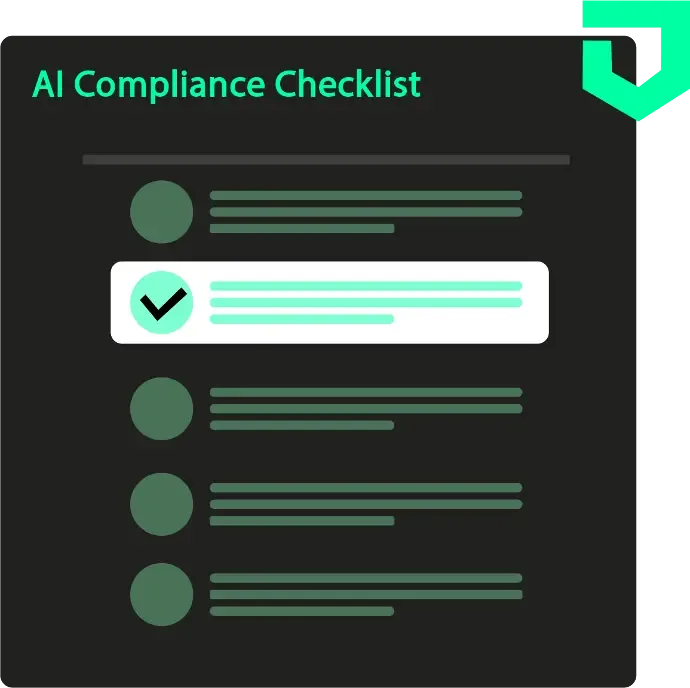
Defaince AI compliance checklist

Mitigate your AI risk.

Tell us about your models and we'll come back with the right audit.